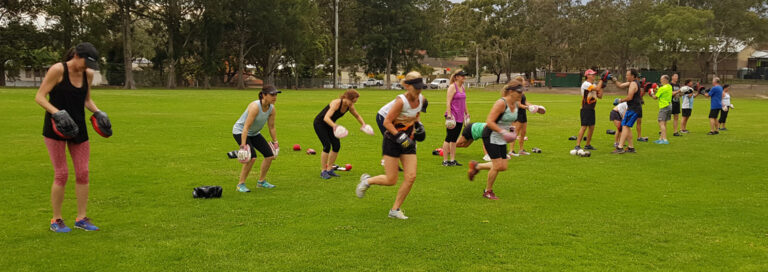

Small-group training can suit you if you enjoy exercising with others and want guidance within a shared session. The useful part is how the session is coached: whether the exercises can be adjusted, questions are welcome and the programme fits your needs.
The word small doesn’t tell you all of that on its own. Before joining, look at what happens in a session and ask how it would work for you.
Notice how the coach works with the group
Can you hear and understand the instructions? Does the coach check that you’ve understood an exercise? Is there time to ask for a different option? Those practical details matter more than an impressive exercise list.
For example, people can practise the same pushing pattern using different push-up heights or a different exercise altogether. You should be able to understand which version you’re doing and why, without feeling you have to copy the person beside you.
Our guide to scaling an exercise gives examples of adjustments to resistance, range, position and pace.
Decide whether you enjoy the shared setting
Some people like having a regular time and familiar faces. Others concentrate better alone or prefer a quieter one-to-one session. Neither preference needs defending.
A group can give you encouragement and make training sociable. It should also leave room for different energy levels and personalities. You’re allowed to be the person who trains well without delivering a speech before breakfast.
The community side of group training can be useful when it feels supportive. It becomes less useful if it makes you feel guilty about an absence or pressured to ignore symptoms.
Understand the limits of a shared session
A group programme may offer plenty of adjustments, but it can’t always provide the same time and specificity as personal training. A particular performance goal, a complex clinical situation or a strong preference for individual coaching may call for another arrangement.
Tell the coach about relevant restrictions before the session starts. If you’re returning from injury, bring the guidance from your treating clinician. A generic alternative isn’t automatically appropriate simply because it looks easier.
Ask the practical questions
- What does a typical session involve, and what level is it aimed at?
- How are exercises adjusted for a beginner or someone with restrictions?
- How many people normally attend, and who leads the session?
- What happens in unsuitable weather or if you need to cancel?
- What are the current price and booking terms?
Get current answers rather than relying on an old article or assuming every group operates the same way. This also gives you a chance to see whether the communication feels clear and comfortable.
Try to judge fit, not just tiredness
After a suitable session, think about whether you understood the movements, could ask questions and felt able to work at an appropriate level. Being exhausted doesn’t tell you everything about the quality of the training.
Consider the travel time and schedule as well. A class you like but can rarely reach may be a less useful fit than another option you can attend regularly. Give yourself permission to make a practical choice.
If you’re exploring group training or bootcamps in Sydney’s Eastern Suburbs, see Rush PT’s training options and ask about the current arrangements.