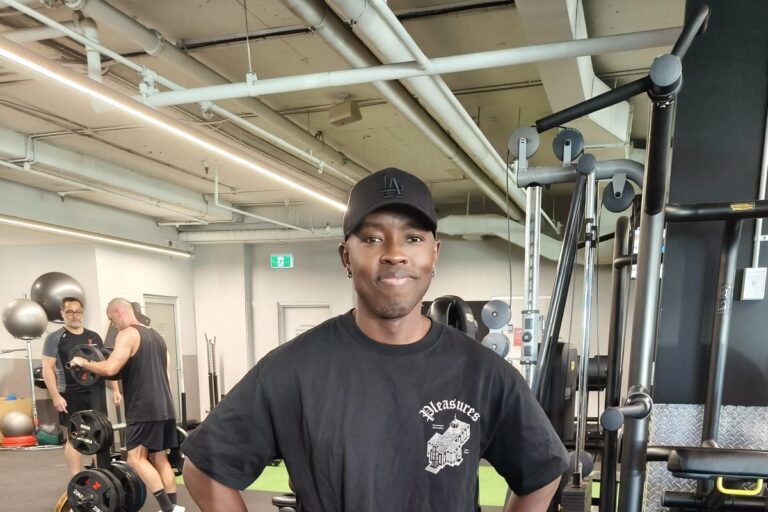

A good training group can give you a regular appointment, familiar faces and company while you exercise. Whether it helps you stay consistent depends on the group, the coaching and how well the sessions fit your life. You don’t have to become the loudest person in the park to get something out of it.
For some people, a bit of conversation makes training more enjoyable. Others prefer headphones and their own programme. Both are perfectly reasonable. The useful question is what helps you come back.
A group gives your week a meeting point
A set session removes a few decisions: when to train, where to go and what to do once you’re there. Over time, recognising the people around you can make arriving feel less awkward.
That can be particularly helpful when you’re new to an area or returning after a break. You can build a routine around a shared activity without needing to manufacture small talk from absolutely nothing. The exercise supplies a topic. So does the weather, especially in Sydney.
None of this guarantees attendance. Travel, cost, caring responsibilities and health still matter. Our guide to useful training accountability looks at those practical pieces.
Look for encouragement without pressure
A supportive group makes room for different starting points. You should be able to rest, use a lighter weight or choose a different exercise without having to apologise for it.
Working beside someone can be motivating, but matching their pace isn’t automatically the right goal. They may have different experience, recovery needs or reasons for training. You can share a session without sharing a kettlebell weight.
Notice what the coach praises. Control, effort appropriate to the person and steady progress are more useful signals than celebrating whoever looks most exhausted.
Ask these questions before joining
- How are exercises adapted? Ask what happens if a movement is new to you or doesn’t suit you.
- What should I disclose beforehand? Relevant health or rehabilitation guidance should reach the coach before the session.
- What does the session involve? Get a clear picture of the strength work, conditioning and any equipment.
- Where and when do we meet? Check the practical details rather than assuming a time from an old article.
- What happens in unsuitable weather? Outdoor training needs a sensible plan.
Our article on scaling exercises to your level gives you a feel for the options a coach might discuss.
You can join quietly
You don’t need to arrive knowing everyone or being fit enough to impress them. Introduce yourself, tell the coach what you need and give yourself time to settle in.
Staying for a chat afterwards is optional. So is coffee. It’s a pleasant extra if you enjoy it, not a secret attendance requirement.
If the atmosphere leaves you feeling judged, rushed or pressured to ignore symptoms, consider another group. An enjoyable community should make training more approachable.
Try the format, then review it
After a few sessions, ask whether the timing works, the exercises suit you and you feel comfortable asking questions. Those answers tell you more than someone else’s enthusiasm for group training.
Rush PT offers group training and bootcamps in Sydney’s Eastern Suburbs, alongside personal training and online PT. Explore the training options and choose the format that feels like a useful addition to your week.