
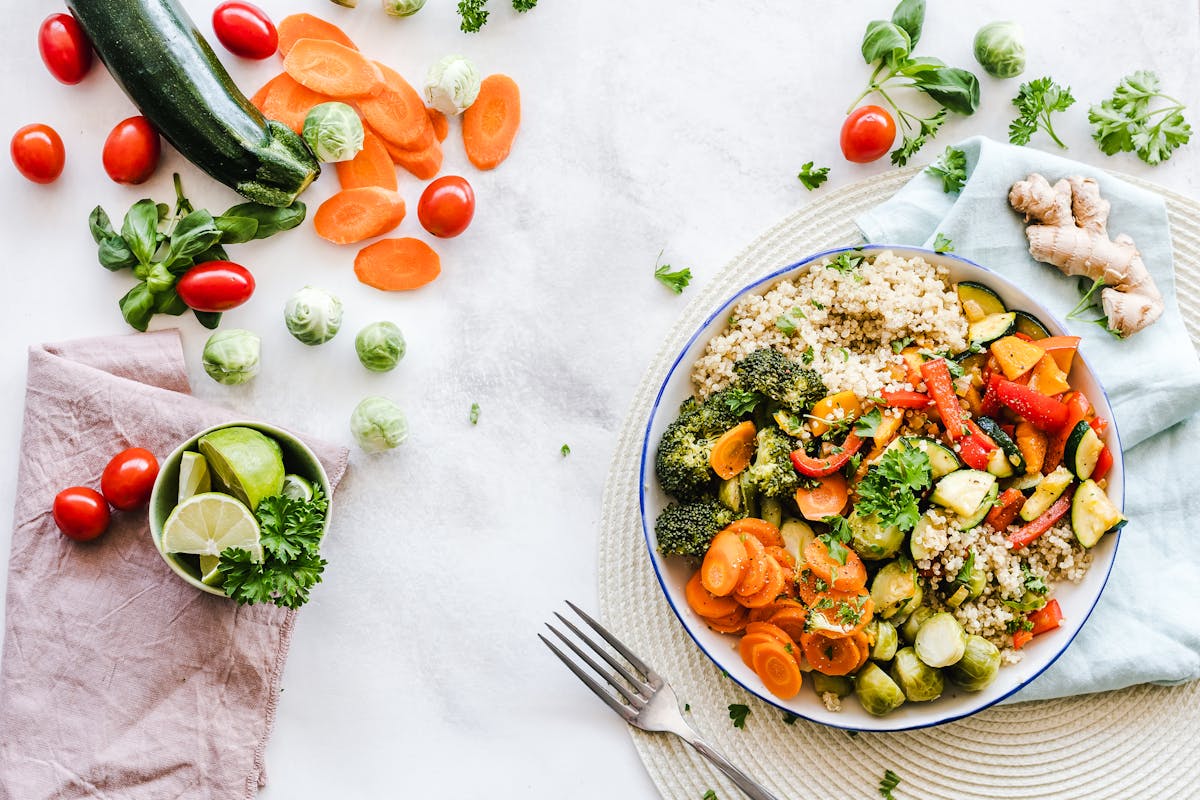
You don’t need a perfect diet to support training. You need an eating pattern that provides enough nourishment for your needs and is practical enough to repeat. A birthday dinner doesn’t require you to restart your entire life on Monday.
That doesn’t mean food choices are irrelevant. It means looking at the overall pattern, your circumstances and what you can improve without making eating a second full-time job.
Use a guide, not a moral scorecard
The Australian Guide to Healthy Eating organises everyday food choices around five food groups. It’s a useful starting point for variety, rather than a list of foods that make you a good or bad person.
Meals can include vegetables or fruit, a suitable grain or other carbohydrate food, and a protein source such as beans, tofu, eggs, fish or meat. Dairy or suitable alternatives can fit across the day. The amounts and combination depend on your needs.
You don’t have to replace familiar meals with an entirely different cuisine. A small change to something you already eat is often easier to organise than learning seven new recipes at once.
What about the 80/20 approach?
Some people use “80/20” as a reminder to allow flexibility. That’s fine as a personal shorthand, but it isn’t a formula guaranteeing results or permission to divide meals into virtuous and unvirtuous piles.
Four unrestricted meals don’t automatically balance against seventeen others. People have different energy needs, health conditions and goals. If counting those percentages makes eating more complicated, leave the percentages out.
A more useful question is whether your usual pattern supports training, health and a workable relationship with food.
Pick one change you can actually maintain
Look at the part of the day that repeatedly gets difficult. Maybe lunch disappears when work gets busy. Maybe you finish training hungry and have nothing convenient available.
- Keep ingredients for one quick meal you enjoy.
- Add a food group that tends to be missing from your usual meals.
- Have a suitable snack available around a busy training day.
- Choose a realistic shopping time before the fridge becomes an abstract art installation.
For ideas around sessions, our post-workout snack guide offers options you can adapt to your appetite and preferences.
Prep ingredients if full meal prep bores you
You can prepare a few components: cooked grains, a protein option and washed or chopped vegetables. Mix them into different meals instead of committing to identical containers all week.
Frozen vegetables, tinned legumes and other convenient foods can make this easier. “Processed” doesn’t automatically mean useless, and cooking every item from scratch isn’t required.
Our meal-prep guide for busy people takes the same practical approach. Store and reheat food appropriately, and prepare quantities you’ll realistically use.
Get help with individual needs
Persistent fatigue, digestive difficulties, a medical condition or significant changes in appetite deserve more than a generic meal rule. A doctor or accredited practising dietitian can help work out what’s relevant.
If food rules leave you anxious or lead to cycles of restriction and overeating, personalised support can be useful. You don’t need to earn help by making the problem severe first.
For the training side, talk to Rush PT about personal training in Sydney’s Eastern Suburbs or online coaching. You can begin building a sensible exercise routine while your eating habits develop alongside it.