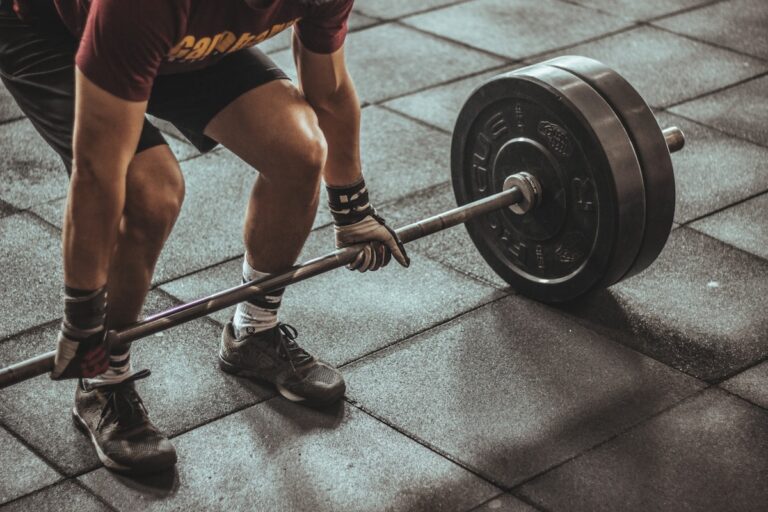
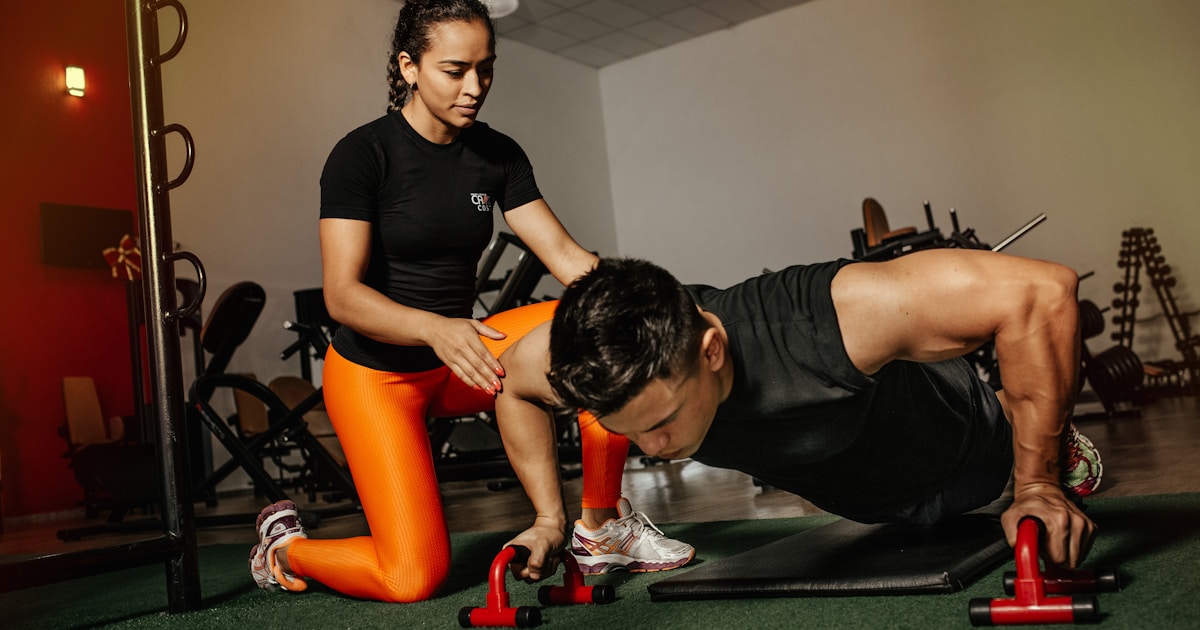
A squat, push-up, supported lunge, plank and optional step-back burpee can give you a useful bodyweight session at home or away. Choose versions you can manage, start with a small amount and take enough rest to keep the movements controlled.
These five exercises aren’t a complete programme for every goal. In particular, they don’t provide much pulling work for your back. They’re a practical collection for days when equipment or time is limited.
1. Squat or sit-to-stand
Stand in a comfortable stance and bend your knees and hips to lower yourself, then stand again. Choose a depth you can control without pain. A stable chair can provide a clear target or turn the movement into a sit-to-stand.
Keep your feet supported and let your knees move in a comfortable direction. You don’t need to copy someone else’s exact foot width. To increase the challenge later, add repetitions or a brief pause before standing.
2. Incline push-up
Place your hands on a wall or a sturdy raised surface. Bend your elbows to bring your chest towards it, then press away. Keep your trunk reasonably steady and choose a hand position that feels comfortable.
A higher surface usually makes the movement more manageable. Lower it gradually as you develop capacity. Our push-up progression guide gives you options between the wall and the floor.
3. Supported split squat or reverse lunge
For a split squat, use a staggered stance and hold a stable support if helpful. Bend both knees within a comfortable range, then rise. Keep the movement unhurried and switch sides.
A reverse lunge adds a step back before lowering. Either version may suit you; neither is automatically comfortable for every knee. Shorten the range, use support or choose another lower-body exercise if needed.
4. Wall, bench or floor plank
Support yourself on a wall, sturdy bench or the floor, using a position where you can keep breathing and hold your trunk steady. Start with a short hold and stop before you lose the position you intended.
Longer isn’t always the next useful step. You can adjust the angle or choose another trunk exercise. A plank practises resisting movement; your trunk also needs to move in ordinary life. It hasn’t signed an agreement to remain completely still.
5. Optional step-back burpee
If getting down and up is comfortable for you, place your hands on a sturdy raised surface, step your feet back, step them in again and stand. Add no jump or push-up unless those elements suit your ability and goal.
Marching briskly is a reasonable alternative. There is no requirement to enjoy burpees or include them in every session.
Turn the exercises into a short session
Warm up with easy movement, then try a comfortable set of each chosen exercise. An initial example could be five to eight repetitions for the moving exercises and a brief plank hold. Rest when needed, and repeat a round only if you’re managing it well.
Our guide to scaling exercises can help you adjust the challenge. Stop if a movement causes pain or you feel unwell. Check surfaces and furniture before starting, especially away from home.
Make a note of the versions you used so the next session is easy to organise. For a broader plan that includes suitable pulling and progressive resistance work, explore Rush PT training.