By Rush PT
If you’re taking a GLP-1 medicine, exercise can help you work on strength, fitness and everyday movement alongside your treatment. A repeatable mix of suitable strength work and aerobic activity is a useful starting point. Your medication, symptoms and current ability still need to shape the plan.
The scales may be changing, but they can’t tell you whether the stairs feel easier or the shopping bags feel lighter. Annoyingly limited little device, really. Give your training a few goals of its own.
What has the research actually tested?
A 2021 New England Journal of Medicine trial studied 195 adults with obesity who didn’t have diabetes. After an initial diet phase, they were allocated to exercise, liraglutide, both together or placebo for one year.
The combination produced a larger reduction in body-fat percentage than either exercise or medication alone. The body-weight difference between the combination and medication-only groups wasn’t statistically significant. Participants were aged 18–65, and exercise was structured. This wasn’t a weights-only programme, a study of frail older adults or a test of every GLP-1 medicine.
A later follow-up in eClinicalMedicine, part of The Lancet Discovery Science assessed people one year after the study treatments ended. Previous exercise participation was associated with better weight maintenance. Only 109 participants attended that assessment, though, so missing data limit confidence.
That’s a reason to build exercise habits you can keep. It isn’t a reason to stop prescribed medication. Changes to treatment belong with your prescriber.
Lean mass isn’t another name for muscle
Headlines sometimes turn “lean mass lost” into “muscle lost”. Those aren’t interchangeable measurements. Lean tissue and fat-free mass include water and other non-fat components as well as muscle. You can’t assume a change in one equals the same amount of skeletal muscle lost.
This Journal of the Endocrine Society paper explains the distinction. Muscle health still matters; we just need to ask what was measured and whether strength or physical function changed too.
For you, that means noticing what you can do alongside measurements your healthcare team considers useful. Are familiar tasks easier? Are you managing your exercises with more confidence? Those observations deserve space in the conversation.
Make the weekly plan manageable
ACSM’s 2026 guidance for healthy adults recommends training the major muscle groups on at least two days a week. Bands, bodyweight and gym equipment can all work. This is general guidance, not a GLP-1-specific prescription.
Two strength sessions plus shorter walks is one possible arrangement. If you’re returning after a long break, you may need to start with less. Before worrying about the perfect programme, work through four questions:
- When can I realistically train?
- Which movements feel comfortable and manageable?
- What equipment and support do I have?
- How will I adjust if appetite, energy or recovery changes?
A coach can help organise suitable pushing, pulling, standing, lifting and carrying movements. You don’t have to graduate through a miserable exercise before being allowed a useful one. Our exercise-scaling guide gives you some options.
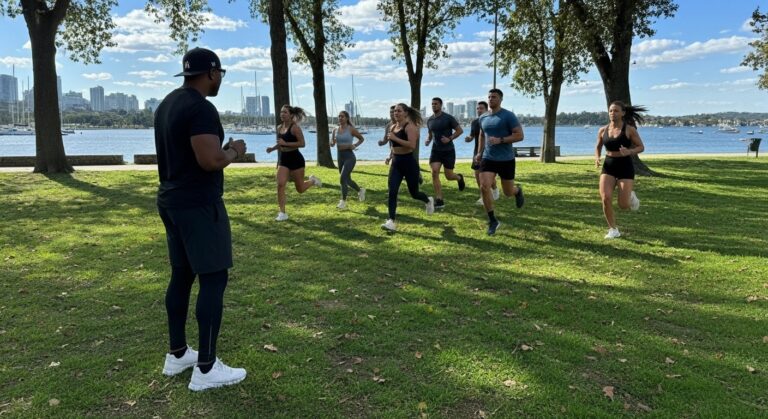
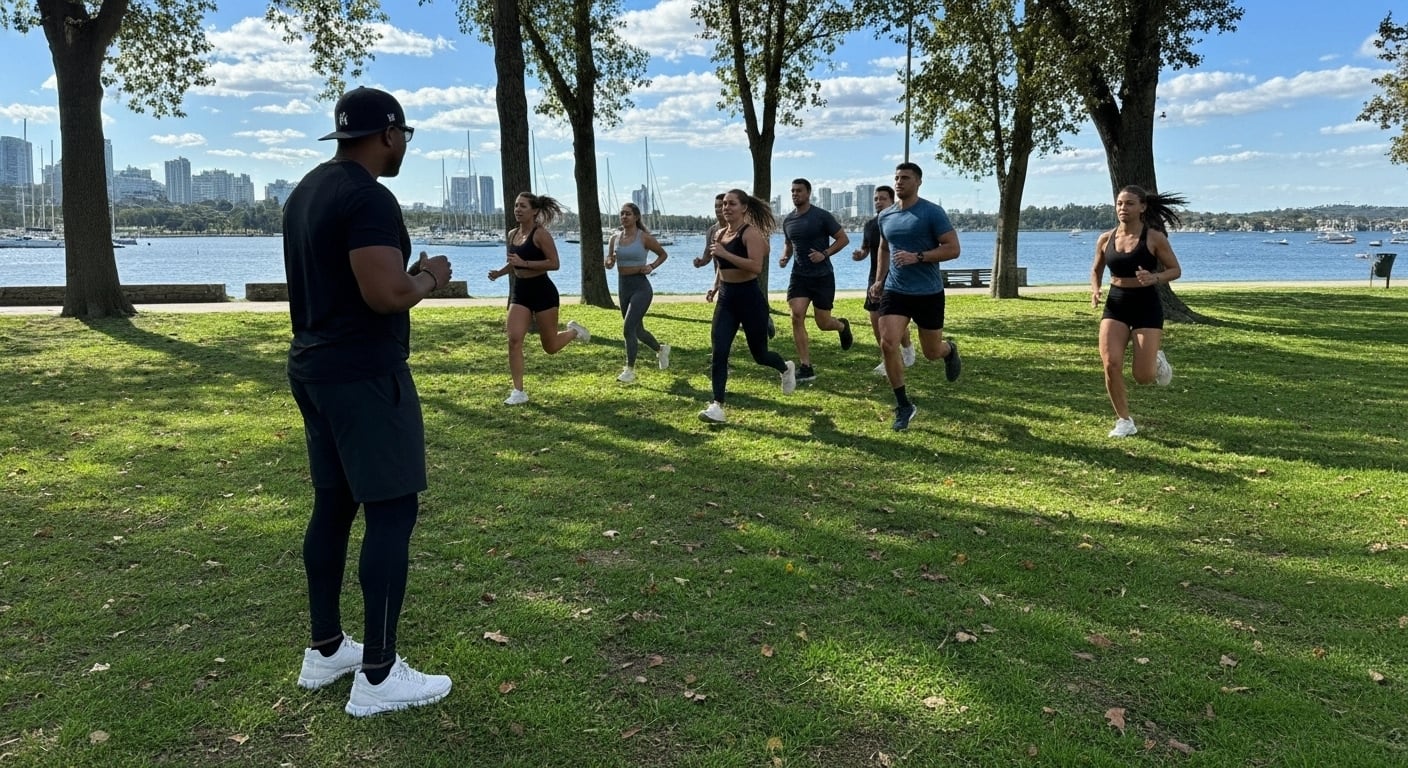
Walking can fit around that if it suits you. Choose a manageable route and pace, whether that’s Rushcutters Bay or your own neighbourhood elsewhere in the world. Someone else’s step count doesn’t need to become your homework.
What about older adults?
Maintaining independence may matter more than reaching a particular weight. In a six-month trial of 160 older adults with obesity, combined aerobic and resistance exercise during a weight-management programme improved physical performance more than either alone. Resistance-containing programmes also limited lean-mass loss compared with aerobic exercise alone.
That was a diet-and-exercise study, not a GLP-1 trial. Direct evidence in older GLP-1 users remains limited. A 2026 review found that only four of its 21 included studies specifically examined older populations, with substantial differences between studies. Neither inevitable frailty nor a workout that prevents it is an established conclusion.
Our article on getting fitter after 60 looks at strength, stamina and balance in more detail.
Keep your care team in the loop
If appetite changes make eating difficult or you feel unwell during training, tell your healthcare team. A 2026 expert consensus supports coordinating exercise, nutrition and medical care, while acknowledging that many practical recommendations still rely on indirect evidence.
Bring a short list to your next appointment: current activity, changes in everyday strength, how eating and drinking are going, and symptoms affecting exercise. Your doctor and an accredited practising dietitian can individualise the medical and nutrition advice.
For help with the exercise side, ask Rush PT about personal training in Sydney’s Eastern Suburbs or online PT. We’ll start with your goals and relevant guidance from your treating clinician.
General exercise information, not advice to start, stop or change medication or a replacement for individual medical or rehabilitation care.